Cor and Corin
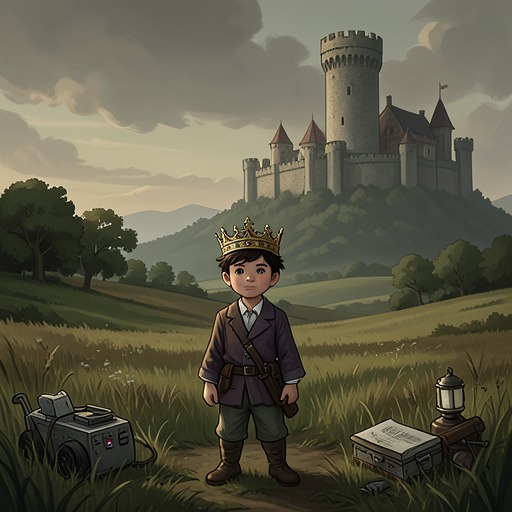
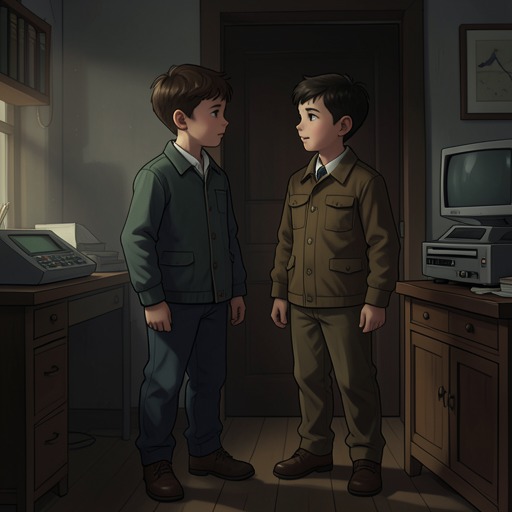
The Horse and His BoyCor and Corin are twin sons of King Lune, separated in infancy when Cor was abducted and grew up as Shasta. Their eventual reunion restores a family relationship that had been hidden from both brothers, but it also changes Archenland’s succession: because Cor was born twenty minutes earlier, he is the heir. The brothers meet that reversal with opposite feelings—Cor’s apology and reluctance, Corin’s relief—and remain close without becoming implausibly free of rivalry.
Identity and Separation
Cor and Corin were born twins to King Lune and the Queen of Archenland. About a week after their birth, they were taken to a wise Centaur in Narnia for a blessing. The Centaur prophesied that one of the boys would one day save Archenland from its deadliest danger. Lord Bar, formerly King Lune’s Lord Chancellor and later revealed to have been secretly serving the Tisroc, heard the prophecy and decided to remove the child it concerned. He kidnapped Cor and carried him away by sea; Corin remained with his parents, unaware that he had a twin brother.
The brothers’ separation explains why their identities could be confused when Cor eventually returned. Cor had been raised far from court as Shasta, without knowledge of his birth or the prophecy. Once he learned that King Lune was his father, he recognized that Corin’s resemblance to him was a clue to their twinship. His disclosure to Aravis—that his name was Cor and that he and Corin were twins—marks the point at which the private mystery of his origin becomes a family fact.
Reunion and the Succession
Cor’s return does not simply restore him to his family; it changes who stands first in line to rule. King Lune tells Cor that he is the heir and that the crown will come to him. Cor objects that Corin is also a twin and therefore the same age. Lune answers that one twin must have been born first: Cor is older by twenty minutes. The small difference in their birth order has a large political consequence, fixing the succession under Archenland’s law.
Cor does not welcome that consequence as a prize. He says he does not want the crown and apologizes to Corin, admitting that he never imagined his return would displace his brother from the kingdom. Corin, by contrast, celebrates that he will not have to be king and will remain a prince. Their responses reveal affection without making either brother’s position interchangeable: Cor feels responsible for the loss Corin faces, while Corin is pleased by the prospect of a less burdened station.
King Lune makes clear that personal preference cannot undo the succession. The king, he explains, is subject to the law that makes him king and cannot set aside the crown any more than a sentry can abandon his post. His account also defines kingship as duty rather than reward: a king must be first in a desperate attack, last in a desperate retreat, and maintain public confidence even in a time of scarcity. The exchange places the brothers’ private feelings within a public order that neither can simply choose away.
An Affectionate Rivalry
Their first responses to one another establish a warm relationship, but the story does not turn the reunion into a promise of permanent harmony. Corin jokingly threatens to knock Cor down if he continues questioning the succession. The narrator then rejects the tidy ending in which the brothers never disagree again: they quarrel and fight about as often as other brothers, and their fights commonly end with Cor knocked down.
That pattern persists as they grow older, though it does not define their adult abilities in the same way. Cor becomes the more dangerous fighter in battle, while Corin is an exceptional boxer, unmatched in the Northern Countries. Corin earns the name Corin Thunder-Fist through that reputation. His later exploit against the Lapsed Bear of Stormness extends the joke into a comic feat: he boxes the bear for thirty-three rounds, after which it becomes a reformed character. The brothers’ contrasting strengths make their rivalry specific rather than a simple contest over rank.
Adult Lives and Narrative Significance
The brothers’ childhood quarrels coexist with a lasting bond. Cor is sorry that his return changes Corin’s inheritance, but Corin’s relief at avoiding the crown prevents the succession from becoming a permanent estrangement between them. Their relationship is presented not as a choice between love and rivalry, but as a family connection that can contain both: they disagree and fight, yet the account treats those conflicts as ordinary features of their continuing brotherhood.
Their story also connects private identity to political law and to the prophecy that prompted Cor’s abduction. The Centaur’s prediction makes Cor’s removal an attempted intervention in Archenland’s future; the account of his return discloses how that lost child became the boy who could fulfill the prophecy. Meanwhile, the succession scene shows that even a father-king cannot rearrange inheritance at will. Cor and Corin’s reunion therefore resolves the concealed kinship while establishing the different places each brother will occupy: Cor as heir, and Corin as a prince whose temperament and talents remain his own.